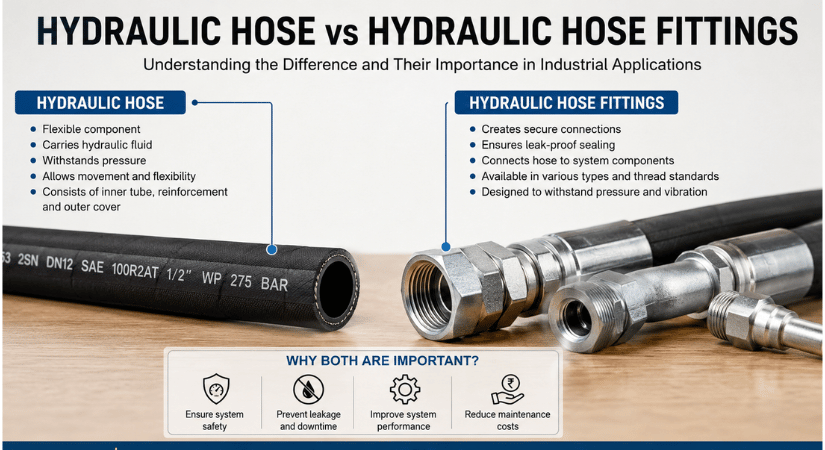
In hydraulic systems, performance depends on more than just pumps and cylinders. Two of the most important components are hydraulic hoses and hydraulic hose fittings. Both work together to transfer hydraulic fluid safely under pressure, but many industries still misunderstand the difference between them.
A hydraulic hose carries the fluid, while the fitting creates a secure connection between the hose and hydraulic equipment. If either component is selected incorrectly, the entire hydraulic system can face leakage, pressure drop, unexpected shutdown, or even equipment failure.
Industries such as construction, manufacturing, mining, agriculture, marine, and heavy engineering depend on properly selected hydraulic hoses and fittings for uninterrupted operations. Choosing the right combination improves safety, system efficiency, and long-term performance.
What is a Hydraulic Hose?
A hydraulic hose is a flexible reinforced tube designed to transport hydraulic fluid under high pressure between hydraulic components. These hoses are commonly used in systems where movement, vibration, or flexibility is required.
Hydraulic hoses are manufactured using multiple layers, including:
- Inner tube for fluid compatibility
- Reinforcement layers for pressure resistance
- Outer cover for abrasion and environmental protection
Different hydraulic applications require different hose constructions depending on pressure rating, temperature, flexibility, and working environment.
Industries looking for reliable Hydraulic Hose solutions generally focus on durability, pressure capacity, and oil resistance to ensure smooth machine operation.
What are Hydraulic Hose Fittings?
Hydraulic hose fittings are mechanical connectors attached at the ends of hydraulic hoses. Their primary function is to connect hoses securely with valves, cylinders, pumps, manifolds, and other hydraulic components.
These fittings are designed to withstand high pressure while preventing oil leakage and maintaining system integrity.
A properly selected fitting ensures:
- Leak-proof connection
- Pressure handling capability
- Resistance to vibration
- Easy installation and maintenance
- Long service life
Industrial users often prefer high-quality Hydraulic Hose Fittings that comply with international thread and pressure standards.
Main Difference Between Hydraulic Hose and Hydraulic Hose Fittings
| Hydraulic Hose | Hydraulic Hose Fittings |
|---|---|
| Transfers hydraulic fluid | Connects hose to components |
| Flexible in design | Rigid metallic component |
| Made using rubber and reinforcement layers | Made using steel, stainless steel, or brass |
| Absorbs movement and vibration | Ensures leak-proof sealing |
| Available in pressure-rated constructions | Available in multiple thread standards and end connections |
Why Proper Hose and Fitting Selection Matters
Many hydraulic failures occur not because of the hydraulic machine itself, but due to poor hose assembly selection. Even a high-pressure hose can fail if paired with the wrong fitting type.
Improper selection can lead to:
- Oil leakage
- Pressure loss
- Bursting of hoses
- Frequent downtime
- Increased maintenance costs
- Safety hazards for operators
This is why industrial buyers prefer working with experienced Hydraulic Fittings Manufacturer in Chennai companies that understand hydraulic pressure requirements and industrial applications properly.
Common Types of Hydraulic Hose Fittings
Ferrule Fittings
Ferrule fittings provide excellent grip and sealing performance in high-pressure applications. These fittings are widely used in hydraulic tube assemblies and industrial fluid transfer systems.
Applications requiring vibration resistance often use Hydraulic Ferrule Fittings for reliable long-term operation.
DIN 2353 Fittings
DIN 2353 fittings are widely used in European hydraulic systems and heavy industrial machinery. These fittings offer strong bite-type connections suitable for high-pressure hydraulic lines.
Industries handling imported machinery often depend on DIN 2353 Hydraulic Fittings for compatibility and performance.
Tube Fittings
Tube fittings are commonly used where rigid tube connections are preferred over flexible hoses. These fittings help maintain stable fluid flow with minimal leakage risk.
Precision hydraulic systems generally use Hydraulic Tube Fittings for clean and secure installations.
Industrial Applications of Hydraulic Hoses and Fittings
Hydraulic hoses and fittings are used across multiple industries where controlled fluid power transmission is essential.
Construction Equipment
Excavators, loaders, cranes, and backhoe machines operate under continuous high pressure and vibration. Strong hose assemblies are necessary for safe operation.
Manufacturing Industries
Hydraulic presses, injection molding machines, and automated production systems rely on leak-free hydraulic connections for uninterrupted productivity.
Agricultural Machinery
Tractors, harvesters, and sprayers require flexible hydraulic hose systems capable of handling rough field conditions.
Mining and Heavy Equipment
Mining applications demand high-pressure hydraulic systems capable of surviving abrasive and high-temperature environments.
Factors to Consider Before Buying Hydraulic Hoses and Fittings
Pressure Rating
Always verify working pressure and burst pressure before selecting hose assemblies.
Fluid Compatibility
The hose inner tube and fitting material must be compatible with hydraulic fluid type.
Temperature Resistance
Industrial environments may expose hoses to high temperatures, requiring suitable material selection.
Thread Standards
Different systems use different thread standards such as BSP, NPT, JIC, ORFS, and DIN fittings.
Corrosion Resistance
Applications exposed to moisture, chemicals, or marine environments may require stainless steel fittings for better durability.
Maintenance Tips for Better Hydraulic System Life
- Inspect hoses regularly for cracks and wear
- Check fittings for leakage or loose connections
- Avoid excessive hose bending
- Replace damaged assemblies immediately
- Use proper clamps and routing methods
- Follow recommended pressure limits
Conclusion
Hydraulic hoses and hydraulic hose fittings may appear to be simple components, but they directly affect hydraulic system safety, efficiency, and machine life. A properly selected hose assembly reduces leakage, minimizes downtime, and improves operational reliability across industrial applications.
Whether the requirement is for high-pressure hydraulic systems, industrial machinery, or heavy equipment applications, selecting the correct hose and fitting combination is essential for long-term performance.
Working with experienced hydraulic component suppliers helps industries choose suitable hydraulic solutions based on pressure ratings, thread standards, fluid compatibility, and application requirements.