Hydraulic Tube Connections for Industrial Fluid Power Systems
Hydraulic tube fittings connect rigid tubing to other tubes, equipment ports and components within a fluid power circuit. A suitable connection depends on the tube, fitting family and mating end working together as one system. Hydrofit Engineers supplies hydraulic tube connection products for industrial requirements across India from its Chennai base.
This page focuses on tube-to-fitting compatibility and procurement. For an overview of other connection families, see the hydraulic fittings range.
How a Hydraulic Tube Fitting Creates a Reliable Connection
A tube fitting normally brings together a fitting body, nut, tube and a sealing or gripping component appropriate to that fitting family. When these parts are correctly matched and assembled, the connection holds the tube in position and provides the intended sealing interface.
In a DIN 2353 cutting-ring connection, tightening the nut drives the cutting ring against the fitting cone and tube. This description applies to that connection family; other tube-fitting systems can use different sealing principles. Components from different systems should not be treated as interchangeable without confirming their standard and compatibility.
Tube Size and Wall Thickness Matter
Tube outside diameter alone is not enough to select a connection. Wall thickness affects tube strength and assembly behaviour, while the material, fitting series and connection standard determine which components belong together. Working pressure, operating temperature and fluid or media must also be reviewed for the specific installation.
The matching tube should have the correct dimensions and condition for the chosen fitting. Hydrofit’s hydraulic tubes and seamless hydraulic tube range provide useful reference points when specifying a complete tube line.
Light Series and Heavy Series Tube Fittings
DIN 2353 tube fittings are available in series selected around the tube dimensions, wall thickness, system pressure and application. Light and Heavy Series are system classifications; they should not be reduced to a simple low-pressure versus high-pressure rule.
Selection should follow the tube and connection requirements for the actual circuit. The dedicated DIN 2353 fitting guide covers this standard-specific family in more detail.
Hydraulic Tube Fitting Configurations
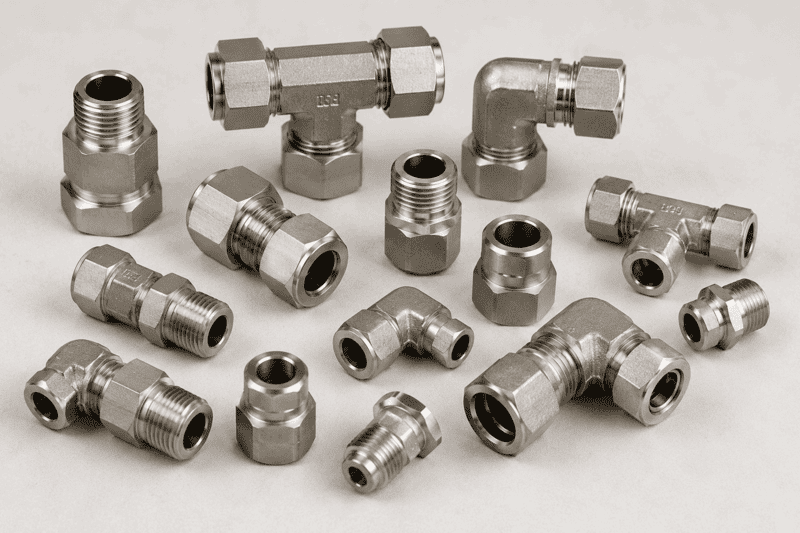
Machine layout and the required connection path determine the fitting configuration. The existing Hydrofit range includes tube-connection forms used for straight runs, direction changes, branches and transitions. Depending on the product family, these may include straight connectors, elbows, tees, unions, bulkhead connections, reducers, stud connectors and swivel configurations.
The configuration name does not confirm compatibility by itself. Buyers should also identify the tube end, thread or port connection, fitting series and sealing method. Where a cutting-ring or ferrule connection is required, the ferrule fitting range provides the product-specific route.
Matching Hydraulic Fittings with the Correct Tube
A dependable connection starts with the specified tube outside diameter and wall thickness. The tube material must be compatible with the fitting and service, and the fitting series must match the selected connection system.
- Confirm tube OD and wall thickness rather than ordering by a general size description.
- Use a clean, square tube end prepared for the relevant fitting system.
- Match the fitting body, nut and ferrule or cutting ring from the intended connection family.
- Check material compatibility with the fluid, temperature and operating environment.
- Follow the assembly procedure for the specific fitting system.
Poor tube preparation, an incorrect fitting size or mismatched components can lead to assembly and sealing problems. Installation torque or tightening guidance should come from the applicable product documentation rather than a universal value.
Tube Fittings for New Systems and Replacement Requirements
For a new system, establish the connection standard and tube specification during design. This keeps mating ends, fitting series and tube dimensions consistent throughout the circuit.
For a replacement, identify the existing fitting before ordering. Record the tube OD and wall thickness, configuration, thread or port details and any visible product marking. If identification remains uncertain, provide a sample, drawing reference, part number or clear photographs together with application information.
What to Specify When Ordering Hydraulic Tube Fittings
A complete enquiry helps confirm the appropriate connection and avoids assumptions. Include:
- tube outside diameter and wall thickness
- fitting configuration
- connection standard or fitting series
- thread or end connection
- required material
- system working pressure
- operating temperature where relevant
- fluid or media
- quantity
- drawing, sample, part number or photographs where applicable
Pressure capability depends on the specific fitting, size, material, tube and connection design. It should be confirmed for the selected item rather than applied as one value across the complete range.
Hydraulic Tube Fittings Supply Across India
Based in Chennai, Hydrofit Engineers supports industrial customers across India with hydraulic tube fittings and related connection products. Supply enquiries are reviewed against the required fitting family, tube dimensions, service conditions and quantity.
Frequently Asked Questions
What information is needed to select a hydraulic tube fitting?
Start with the tube OD and wall thickness, fitting configuration, connection standard, thread or end connection, material, pressure, temperature, media and quantity. A drawing, sample or clear photographs can help with replacement identification.
Does tube wall thickness affect fitting selection?
Yes. Wall thickness is part of the tube specification and can affect which fitting series and assembly arrangement are suitable. It should be checked together with tube OD and system requirements.
What is the difference between a tube fitting and a hose fitting?
A tube fitting is selected for rigid tubing and its dimensional and connection requirements. A hose fitting is intended for a flexible hose assembly and must match the hose type and assembly method. They should not be selected as substitutes based only on thread size.
Can different hydraulic fitting standards be mixed?
Do not assume that different standards or sealing systems are interchangeable. Confirm the mating geometry, thread, seal, dimensions and material for both sides of the connection.
How can I identify a replacement tube fitting?
Record the tube dimensions, fitting shape, thread details, sealing face and visible markings. Where measurements are uncertain, share a sample, drawing, part number or clear photographs with the application details.
Does Hydrofit supply hydraulic tube fittings across India?
Hydrofit Engineers is based in Chennai and handles enquiries from industrial customers across India. Availability should be confirmed against the required configuration, material and quantity.